Medieval vs Renaissance Clothing: A Comparative Analysis
The medieval and Renaissance periods, each spanning several centuries, saw distinct transformations in fashion, reflecting significant cultural, socioeconomic, and technological shifts. This article delves into the intriguing world of medieval vs. Renaissance clothing, highlighting key differences and similarities.
The medieval period, roughly from the 5th to the 15th century, was characterized by its conical hats and long, flowing garments, while the Renaissance, from the 14th to the 17th century, introduced more form-fitting silhouettes and intricate detailing. Let's explore these periods and their respective clothing in detail.
Medieval Clothing
The medieval era saw fashion dictated primarily by religious and social norms, with clothing serving to denote one's status in society. Garments were typically made from wool, linen, or cotton, with silk reserved for the wealthy.


garments of the lower classes
Those in lower social classes wore simple, functional clothing. Tunics, often made of rough wool, were common, extended to varying lengths based on one's profession. Peasants favored shorter tunics for ease of movement, while laborers and artisans donned longer garments for protection.
Undergarments were usually made of linen and were oftenGoes without saying that hygiene in the medieval era was rudimentary; thus, underclothing served as a barrier between the skin and outer garments, absorbing sweat and offering some protection against lice and other parasites.

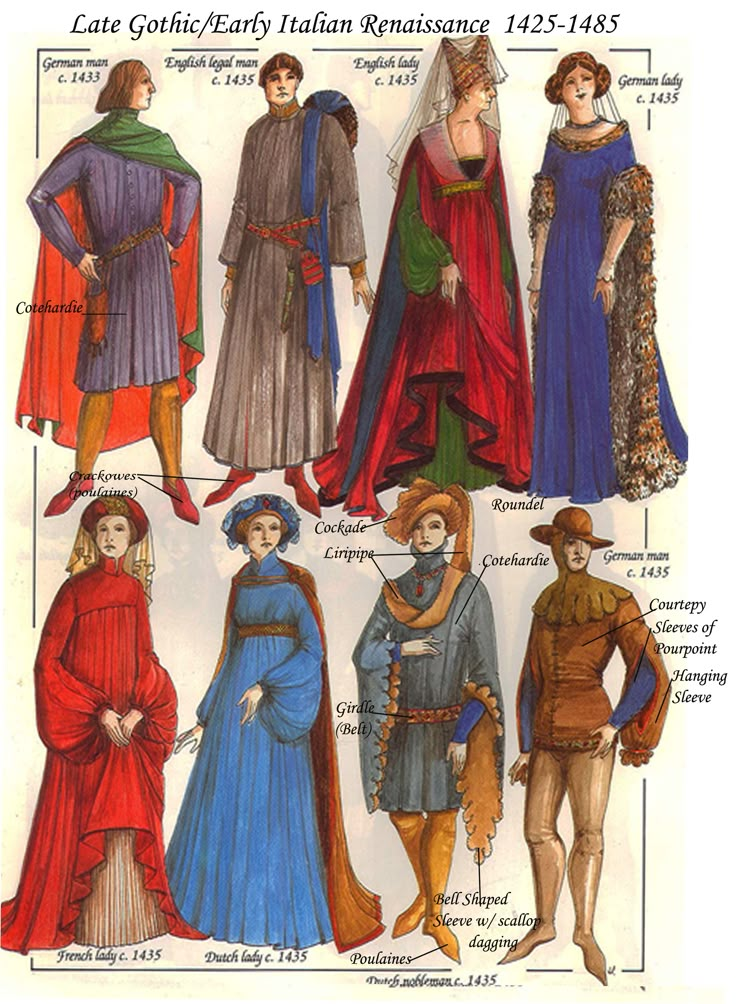

garments of the nobility
The nobility, however, enjoyed far more sumptuous attire. Fabrics like silk and velvet were reserved for them, as were complex dyeing techniques to achieve vibrant colors. Richly embroidered garments with intricate patterns signified wealth and high social standing.
Moreover, fashion among the nobility was susceptible to trends. Towards the late medieval period, styles became increasingly elaborate, with puffed sleeves, intricate headdresses, and elaborate trims becoming popular. Nevertheless, medieval fashion was relatively stagnant compared to the dynamism of Renaissance attire.
Renaissance Clothing
The Renaissance, starting in Italy and spreading throughout Europe, marked a profound shift in clothing trends, reflecting the period's spirit of exploration, individualism, and humanism. Tailoring improved, leading to better-fitting clothing, and new fabrics and colors were introduced.


sering Genre and Silhouette
Renaissance clothing is renowned for its clear distinction between genders. Men wore tights and doublets, followed by surcoats or jerkins, while women donned intricate gowns with puffed sleeves and elaborate headdresses. The silhouette became more streamlined, reflecting the period's fascination with Classical Greek and Roman art and architecture.
The popularization of printing led to an explosion of pattern books and fashion guides, which democratized fashion trends and allowed people to keep up with the latest styles. This widespread dissemination of fashion was a stark contrast to the medieval period's societal stratification in dress.
Detailing and ings
Fabrics were often lavishly adorned with elaborate embroidery, jewels, or metallic threads. Slashed sleeves, exposing richly embroidered undergarments beneath, were trendy.ориш до этого, the Renaissance saw an increase in intimacy and individuality in clothing, reflecting the humanist focus on the self and personal experience.


However, fashion in the later Renaissance became increasingly extravagant, culminating in the opulent styles of the Elizabethan era in England. Men's clothes grew excessively padded and puffy, and women's gowns featured exaggerated farthingales and tudor-style gowns, accentuating narrow waists and wide hips.
The medieval vs. Renaissance clothing comparison reveals a stark evolution in clothing trends, reflecting these periods' cultural, socioeconomic, and technological differences. While both periods showcased clothing's role as a social signifier, Renaissance fashion was more dynamic, reflecting the period's emphasis on individualism and human experience.
Understanding medieval and Renaissance clothing not only educates us about the past but also sheds light on continued influences in today's fashion. Indeed, many modern trends can trace their roots back to these periods, demonstrating the enduring power of historical clothing styles.
Related Articles

Galvanized Steel vs Magnetic Primer: A Comparative Analysis
When it comes to steel preparation and treatment, two common methods stand out: galvanizing and using magnetic primer. Both processes enhance the steel's...

Greek Sculpture vs Roman Sculpture: A Comparative Analysis
Greek sculpture and Roman sculpture, both pillars of Western art history, have captivated scholars and enthusiasts for centuries. Each possesses distinct...

Asian Lady Beetle vs Ladybug: A Comparative Analysis
The Asian Lady Beetle and the common Ladybug often get confused, but they are not the same species. In fact, they belong to different genera and have distinct...

Vesicles in Plant and Animal Cells: Comparative Analysis
In the vast and interconnected world of biology, one question that often surfaces is, "Are vesicles present in both plant and animal cells?" The answer is yes...

Alkyd Enamel vs Acrylic Enamel: Comparative Analysis
When it comes to choosing between alkyd enamel and acrylic enamel, it can be a challenge due to their similarities. Both are widely used in automotive...

Copper vs Bronze: Comparative Analysis of Two Iconic Metals
In the realm of metallurgy, copper and bronze are two metals that often take the spotlight. Both have a rich history, unique properties, and numerous...